How To Start Trading Memecoins As A Beginner
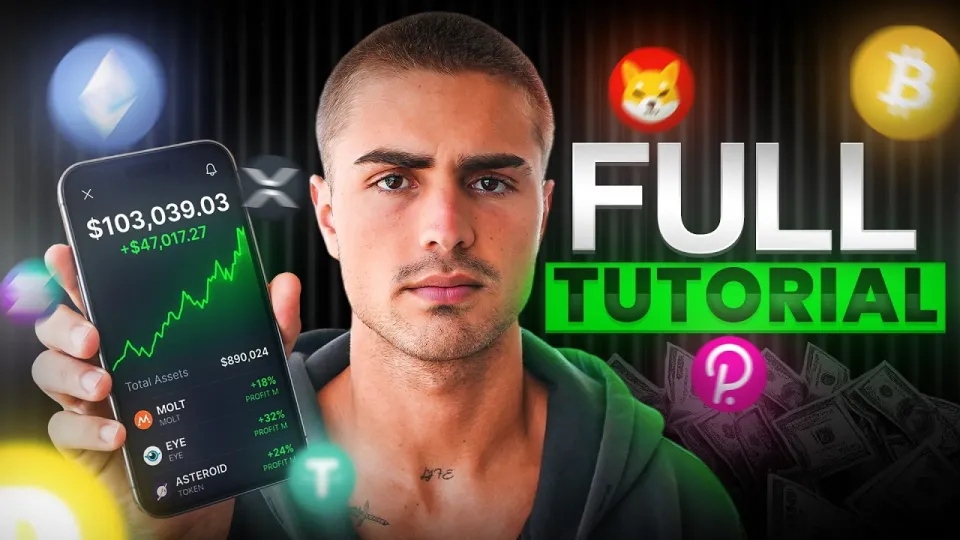
Video: How To Start Trading Memecoins As A Beginner In 2026
Need articles like this for your video? They help promote it on YouTube and Google — order them in the Telegram bot @sat_sit_bot. It writes articles around your video, embeds the video and publishes them on popular niche websites (no ads). Free trial — 50 articles.
· based on the channel TJR
Memecoin trading for beginners means buying and selling highly volatile crypto tokens that are driven mostly by community hype, social media, and on-chain activity rather than by fundamentals. To start, you need a self-custody wallet, a trading terminal, a way to track wallets and socials, and strict risk rules — because most memecoins eventually go to zero. The TJR video "How To Start Trading Memecoins As A Beginner In 2026" walks through a practical beginner workflow and links to tools like Fomo (10% off fees), Axiom, J7 Tracker, and Cielo.
What memecoin trading actually is
Memecoin trading is the practice of speculating on tokens that have no cash flow, no product, and often no team — their price is a pure function of attention. That attention can come from a viral tweet, a TikTok trend, a Telegram group, or a coordinated wallet cluster. Because there is no fundamental floor, a memecoin can drop 90% in minutes and never recover. This is why experienced traders treat memecoins as a casino-like sub-sector of crypto, not as an investment portfolio.
The upside is that memecoins can also multiply 10x or 100x in hours. That asymmetry — tiny probability of a huge win, high probability of a total loss — is the entire game. Beginners who survive are the ones who size positions small enough that a string of losses does not wipe them out. The TJR video frames this as a beginner-friendly process, but the underlying math is brutal: you are competing against bots, insiders, and full-time on-chain analysts.
The beginner toolkit: wallets, terminals, trackers
A working memecoin setup has three layers: a wallet to hold funds, a terminal to execute trades, and trackers to find and monitor opportunities. The video description points to Axiom as the trading terminal, J7 Tracker for Twitter monitoring, and Cielo for wallet tracking. Fomo is presented as a trading platform with a fee discount via the referral link.
- Wallet. Use a self-custody wallet such as Phantom (Solana) or MetaMask (Ethereum and EVM chains). Never trade memecoins from a centralized exchange account if you want early access to new launches.
- Trading terminal. Axiom and similar terminals let you buy, sell, and set limit orders on new tokens across multiple chains. They also show liquidity, holder counts, and dev wallet activity.
- Social tracker. J7 Tracker monitors crypto Twitter accounts so you can see which influencers are posting about a token before the crowd piles in.
- Wallet tracker. Cielo lets you follow specific wallets — often called "smart money" — and see what they buy and sell in real time.
- Funding. You will need SOL or ETH for gas and for the trade itself. Bridge or buy on an exchange, then send to your wallet.
A realistic first-trade checklist
Before you click buy on any memecoin, run through a checklist: contract address verified, liquidity locked or burned, holder distribution not dominated by one wallet, socials active, and no obvious copy-paste of another token's branding. This does not guarantee a win, but it filters out the laziest scams.
- Verify the contract. Copy the address from the official source (project Twitter or Telegram) and paste it into the terminal. Fake tokens with identical names are everywhere.
- Check liquidity. If liquidity is under $50k or unlocked, the dev can pull it at any moment — that is a rug pull.
- Look at holders. If the top 10 wallets hold more than 30–40% of supply, insiders can dump on you.
- Read the socials. A token with 10,000 followers and zero engagement is usually botted.
- Set your exit before entry. Decide your stop-loss and your first profit-taking level in advance, and write them down.
Risk management rules that keep beginners alive
Risk management is the only part of memecoin trading that is fully under your control, and it is the part most beginners skip. A common rule is to risk no more than 1–2% of your total trading capital on a single memecoin. If you have $1,000, that means $10–$20 per trade — small enough that 20 losses in a row still leave you with capital to learn.
Another rule is to take profits in tranches. If a token doubles, sell 25–50% of your position and let the rest ride with a trailing stop. This locks in gains and removes the emotional pressure of watching a winner turn into a loser. Finally, never add to a losing memecoin position hoping to "average down" — memecoins rarely recover from a real breakdown, and averaging down is how small losses become account-ending losses.
What the comments reveal about the hype cycle
The most-liked comments on the TJR video are skeptical: viewers call it a Fomo advertisement, point out that the creator is reportedly down $800k on the platform over 30 days, and joke that the real beginner strategy is "just accept the rug pull." Other comments describe months of studying charts and buying courses without becoming profitable, and ask whether consistent profitability is even achievable for most people.
Those reactions are a useful reality check. Affiliate links and referral codes are a normal part of crypto content, but they create an incentive for the creator to promote platforms and tools regardless of whether viewers profit. A single video — even a well-produced one — is not a trading system. Treat it as an introduction to the tools and vocabulary, then paper-trade or use tiny real positions until you have your own data on whether your approach works.
Common beginner mistakes to avoid
Beginners lose money in memecoins for predictable reasons: buying after a token has already pumped, using too much leverage or too large a position, chasing a token because an influencer posted it, and refusing to sell a loser. Another frequent mistake is trading on a chain or terminal you do not understand — if you cannot explain how gas, slippage, and liquidity work on that chain, you are not ready to trade there.
A less obvious mistake is treating a lucky win as skill. A beginner who turns $100 into $1,000 on one trade often increases position size dramatically, then gives it all back on the next three trades. The traders who last are the ones who keep position sizing constant and boring, regardless of recent results.
Useful links
- Fomo trading platform with 10% off fees: https://fomo.family/r/tjr
- Axiom trading terminal: https://axiom.trade/@tjrtrader
- J7 Tracker (Twitter monitoring): https://j7tracker.io/
- Cielo wallet tracker: https://cielo.finance/
Final thoughts
Starting memecoin trading as a beginner is possible, but it is closer to learning a high-risk skill than to following a recipe. The TJR breakdown is a reasonable starting map: set up a wallet, pick a terminal, use trackers, and respect risk limits. Just remember that the video is produced by a creator with affiliate incentives, and that most participants in this niche lose money. If you decide to try it, start with an amount you can lose completely, use the Fomo link for the fee discount if you want to test that platform, and treat every trade as a data point rather than a payday.
Key takeaways
- Memecoin trading is a high-risk crypto niche where most beginners lose money; the TJR video walks through a beginner workflow and links to tools like Fomo, Axiom, J7 Tracker, and Cielo.
- A typical setup includes a self-custody wallet (Phantom or MetaMask), a trading terminal (Axiom or Fomo), and trackers (J7 Tracker, Cielo) to monitor wallets and socials.
- Risk management is non-negotiable: use small position sizes, set hard stop-losses, and never invest more than you can afford to lose entirely.
- Viewer comments on the video flag paid-promo concerns, rug pulls, and the gap between course promises and real results — treat any single video as education, not a guaranteed system.
- Fomo link from the video: https://fomo.family/r/tjr offers a 10% fee discount for new users.
Questions & answers
How much money do I need to start trading memecoins?
You can technically start with $50–$100, but that amount is mostly for learning, not for meaningful profit. A practical beginner approach is to risk only 1–2% of your total capital per trade, so a $1,000 bankroll means $10–$20 per position. Never use rent, savings, or borrowed money for memecoins, because total loss is a normal outcome.
Are the tools in the TJR video necessary to trade memecoins?
No single tool is mandatory, but the categories matter: a self-custody wallet, a trading terminal, and some way to track wallets or socials. Axiom, Fomo, J7 Tracker, and Cielo are the specific tools linked in the video. You can substitute alternatives, but skipping trackers entirely usually means you are the last person to hear about a token.
Why do so many viewers call the video an advertisement?
Because the description includes referral and affiliate links, including a Fomo sign-up with a fee discount. That does not automatically make the content false, but it does mean the creator earns money when viewers sign up. Treat the video as an introduction to tools and process, not as proof that the strategy is profitable.
Is consistent profitability realistic for a beginner memecoin trader?
For most people, no — at least not quickly. Memecoins are a negative-sum game after fees, gas, and rug pulls, and you compete with bots and insiders. A small minority can become profitable, but it usually takes months of deliberate practice, strict risk rules, and a willingness to lose many small trades while learning.
Source: How To Start Trading Memecoins As A Beginner In 2026 · Markdown version